Vertical Lettuce Farms in Distribution Centers: Norwegian Retail Case and Adoption Risks
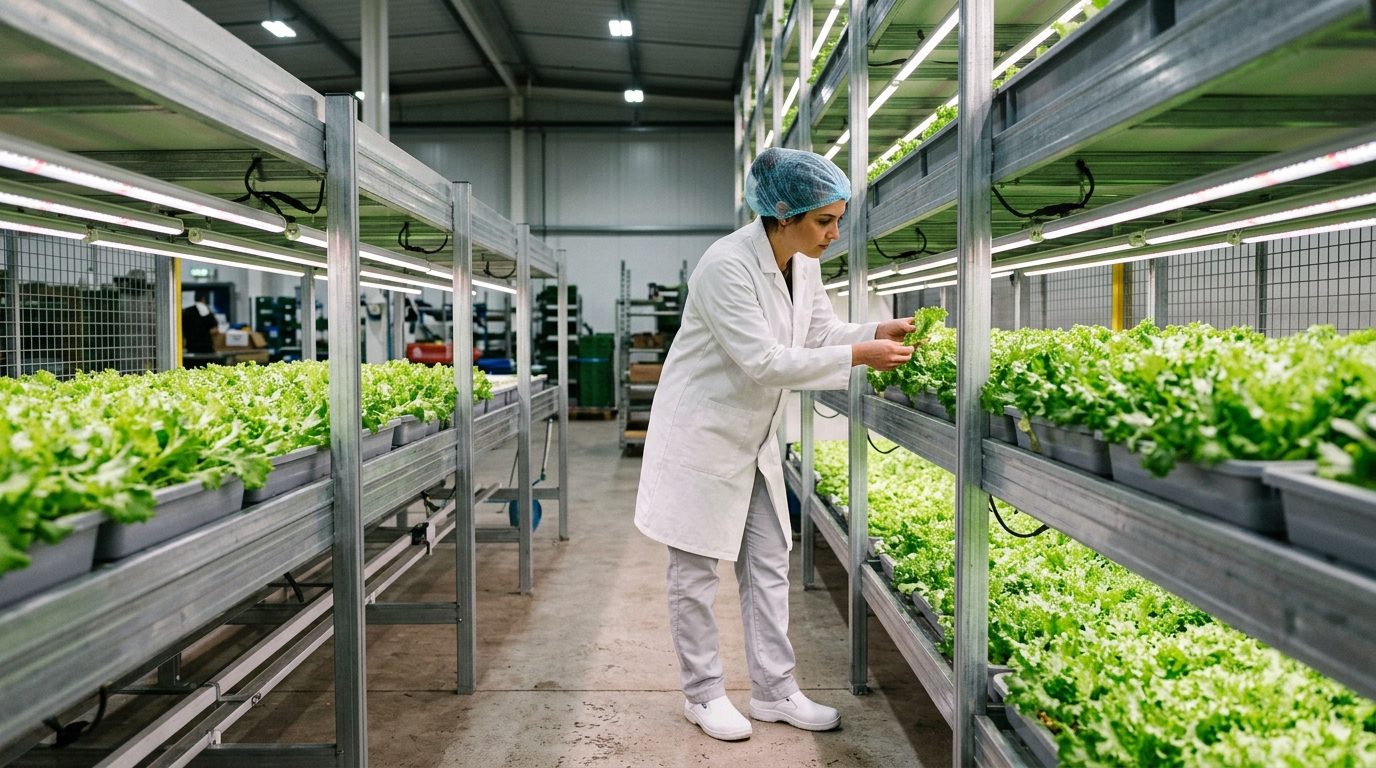
Integrating protected cultivation modules inside retail distribution centers shortens delivery routes and cuts post-harvest losses for perishable crops. Norwegian grocery retailer Coop Norway, in partnership with technology developer Avisomo, implemented a vertical farm project within its central distribution hub. According to VerticalFarmDaily, growing leafy greens directly within the retail supply chain has proven commercially viable, with current consumer demand outpacing initial harvest volumes.
Integration Experience: Demand and Supply Chain Margins
The first commercial crop line from the distribution hub vertical farm was Reindyrka Crispi lettuce, supplied to Coop Mega stores. As noted by Coop Norway CEO Philipp Engedal, consumer response exceeded preliminary expectations, with the primary operational challenge at this stage being a shortage of lettuce volume to fully meet the generated demand.
Project developers highlight restructured logistics as the core economic driver. According to Avisomo Chief Commercial Officer Endre Thesen Harnes, direct integration of vertical farming into the Coop distribution chain saves 50% on margins by eliminating intermediate supply chain layers. Cultivating greens at the order fulfillment site removes regional transport legs, cross-docking, and third-party warehousing.
The second commercial positioning factor is post-harvest longevity. Avisomo states that eliminating long-distance transport combined with a fully controlled microclimate delivers extended shelf life. Company representatives reported sensory trials where packaged lettuce samples maintained marketable quality for up to 99 days without signs of pinking or leaf tissue breakdown.
What the Distribution Center Farm Model Means for Greenhouse Complexes
For commercial greenhouse managers and protected cultivation designers, the emergence of production sites inside distribution centers signals a shift in the fresh leafy greens market. The traditional supply model relies on automated gutter systems in dedicated greenhouse operations, followed by packaging, precooling, and road transport to retail distribution hubs.
Embedding vertical modules into logistics hubs reduces retail transportation costs and eliminates product shrink between the greenhouse and the warehouse. However, logistics represents only a fraction of total production costs for leafy greens. For commercial greenhouses, natural solar radiation and high utilization efficiency of installed lighting capacity remain major competitive advantages. A previous review on comparing LEDs and HPS lamps on lettuce lines examined in detail how specific energy consumption per gram of biomass depends on planting density and supplemental lighting type.
Inside a warehouse vertical farm, natural light is entirely absent: 100% of photosynthetically active radiation is generated by artificial lighting, and heat dissipated by LED modules requires continuous removal via HVAC air handling units and chillers. Consequently, saving 50% on logistics and retail margins comes with higher capital expenditure per square meter of growing area and elevated specific electricity consumption per kilogram of harvested greens.
Adoption Limits and Baseline Data Context
When evaluating the Coop Norway and Avisomo experience, several market constraints and data limitations must be taken into account:
- Lack of energy balance data: The original source provides no data on specific electricity consumption (kWh per kilogram of marketable yield), installed electrical capacity of the lighting and HVAC systems, or temperature and humidity regimes inside the distribution center.
- Climate specifics and import substitution: Norway relies heavily on winter lettuce imports due to short photoperiods. This makes local production competitive against import price fluctuations regardless of growing technology.
- Capital expenditure and infrastructure: Integrating a closed hydroponic cultivation system into an active distribution facility requires surplus electrical capacity, water treatment, and drainage infrastructure, the specifications of which were not disclosed.
- Ultra-long storage as a laboratory trial: Maintaining lettuce quality for up to 99 days was recorded in internal sensory tests and does not represent standard commercial retail shelf life.
Practical Takeaways for Managers and Designers
To objectively compare the distribution center cultivation model with traditional greenhouse facilities, protected cultivation specialists should consider key technical parameters:
- For facility designers: When evaluating indoor lettuce lines within warehouse spaces, available electrical capacity must be matched against required photosynthetic photon flux density. The total absence of sunlight throughout the lettuce cycle requires delivering stable PPFD at target agronomic levels with continuous microclimate and heat rejection management.
- For greenhouse managers: To maintain strong positions in retail contracts, shortening the interval between harvest and delivery to the retailer distribution center is critical. The Norwegian project demonstrates that retail buyers prioritize extended shelf life for stores and end consumers over farm-gate batch pricing alone.
- For sales teams and agronomists: Reviewing post-harvest cooling protocols and modified atmosphere packaging is strongly recommended. Enhancing the shelf life of greenhouse-grown produce offsets the primary consumer advantage of indoor vertical modules while preserving the greenhouse's core asset: lower production costs driven by natural sunlight during spring and summer cycles.